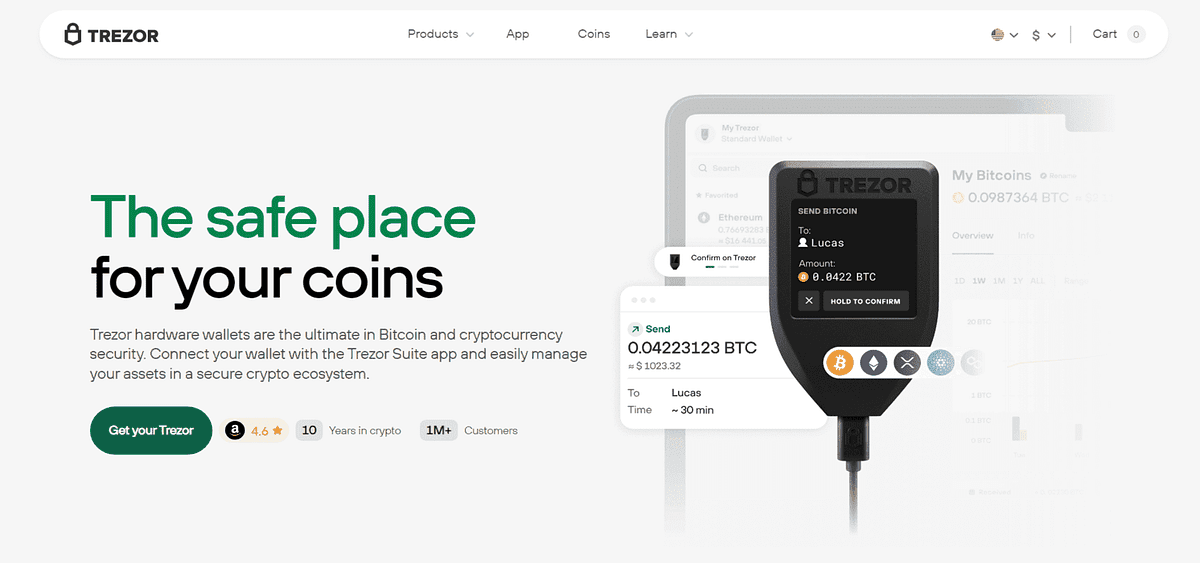
Trezor.io/start: A Complete Guide to Getting Started with Your Trezor Hardware Wallet
In the world of cryptocurrency, security is one of the most important concerns for investors and users. As digital assets continue to grow in popularity, protecting private keys from online threats has become essential. This is where hardware wallets come into play, and Trezor is one of the most trusted names in this space. The official setup page, Trezor.io/start, serves as the gateway for users to securely initialize and manage their Trezor hardware wallets.
Trezor.io/start is designed to provide a safe and user-friendly onboarding experience for both beginners and experienced crypto users. When you purchase a Trezor device—such as the Trezor Model One or Trezor Model T—this page ensures that you set it up correctly using authentic software. By guiding users to the official platform, Trezor helps reduce the risk of phishing attacks and counterfeit applications, which are common threats in the crypto ecosystem.
The setup process begins by connecting the Trezor device to a computer or compatible mobile device. Once connected, users are instructed to visit Trezor.io/start, where they can select their device model. The website then guides them to install Trezor Suite, the official desktop and web application used to manage cryptocurrencies. Trezor Suite acts as a control center, allowing users to send, receive, and monitor their digital assets securely.
One of the most critical steps during setup is generating the recovery seed. This seed phrase, typically consisting of 12 or 24 words, is the master key to the wallet. Trezor.io/start emphasizes the importance of writing this seed down on paper and storing it offline in a secure location. Users are strongly advised never to share this phrase or store it digitally, as anyone with access to it can control the funds. This focus on education and best practices is a major strength of the Trezor onboarding process.
After securing the recovery seed, users can create a PIN to protect their device from unauthorized physical access. Each time the Trezor wallet is connected, the PIN must be entered, adding another layer of protection. Trezor.io/start explains this step clearly, ensuring users understand how PIN protection works and why it is important.
Beyond setup, Trezor.io/start also introduces users to the broader ecosystem of supported cryptocurrencies and features. Trezor wallets support hundreds of coins and tokens, including Bitcoin, Ethereum, Litecoin, and many ERC-20 tokens. Through Trezor Suite, users can also access advanced features such as portfolio tracking, coin management, and integration with third-party applications like decentralized exchanges.
In conclusion, Trezor.io/start is more than just a setup page—it is a comprehensive entry point into secure cryptocurrency management. By providing clear instructions, emphasizing security best practices, and guiding users toward official tools, Trezor ensures that users can confidently protect their digital assets from both online and offline threats. For anyone serious about crypto security, starting at Trezor.io/start is a smart and responsible first step.